According to KNVEY, there are 1.34 billion websites on the internet as of early 2026. Still, 96.55% of pages receive zero traffic from Google, and only 1.94% of all pages receive 1 to 10 monthly search visits. There is so much content out there, heavily optimized for search engine still only a handful of them win the ranking race. Why? The secret lies in understanding users’ search intent and then implementing it in SEO content.
Many SEO content writers are limited to choosing the best keywords and then using them naturally in their blog posts, alt text, H1 tags, and URLs. Well, that’s the first step towards optimizing your content. But if you really wish to make the most of the keywords, you will have to delve deeper and understand the purpose of that keyword as well, and that is what search intent is all about.
Table of Contents
What is Search Intent?
If keywords are “What” of a search term, then search intent is the “Why”. Every user searching for any term on the internet has some reason behind that search, and they expect a specific result from that search query. Well, you have to understand that reason, and that’s what search intent is.
If you know what the user is looking for, you can serve them the right content. It’s like when a tourist asks you for the best places to eat in Delhi, he wishes you to give him the top 5 best places to eat in Delhi, not the history of Delhi or the best places to visit in Delhi.
Why is search intent important in SEO content writing?
You can better understand this with an example.
I am hungry at 11:00 PM and search for “best pizza near me”. Now, I would expect Google to show me listings for the best pizza shops in my locality or Maps. Because the ultimate aim of Google is to serve its users the most relevant and useful content.
But if you have used the keyword “best pizza near me” in your blog where you have explained about a pizza recipe, I will never click on your blog at 11:00 PM at night with a stomach rumble and “best pizza near me” in the search bar of my mobile screen. So, your blog would never rank for “best pizza near me.”

This is why matching your content with search intent is necessary. It helps users find information quickly. This improves engagement, traffic, and credibility of your content. And when Google sees these signs, it pushes your content up in the ranking.
Now that you have understood the basics of search intent in content writing, you might be thinking how hard it could be to understand that if a person is searching for “best pizza near me, he would be expecting a list of pizza shops. Isn’t that obvious? Well, that’s not always the case.
Now let’s take the example of the keyword “apple”. What’s the search intent for this keyword? Is it the fruit Apple or the company Apple? Similarly, “pizza”. Is the person looking for pizza shops, a pizza recipe, or the history of pizza? Search intent isn’t always as straightforward as it looks. This is why we have to delve deeper into search intent. Let’s start with the type of search intent.
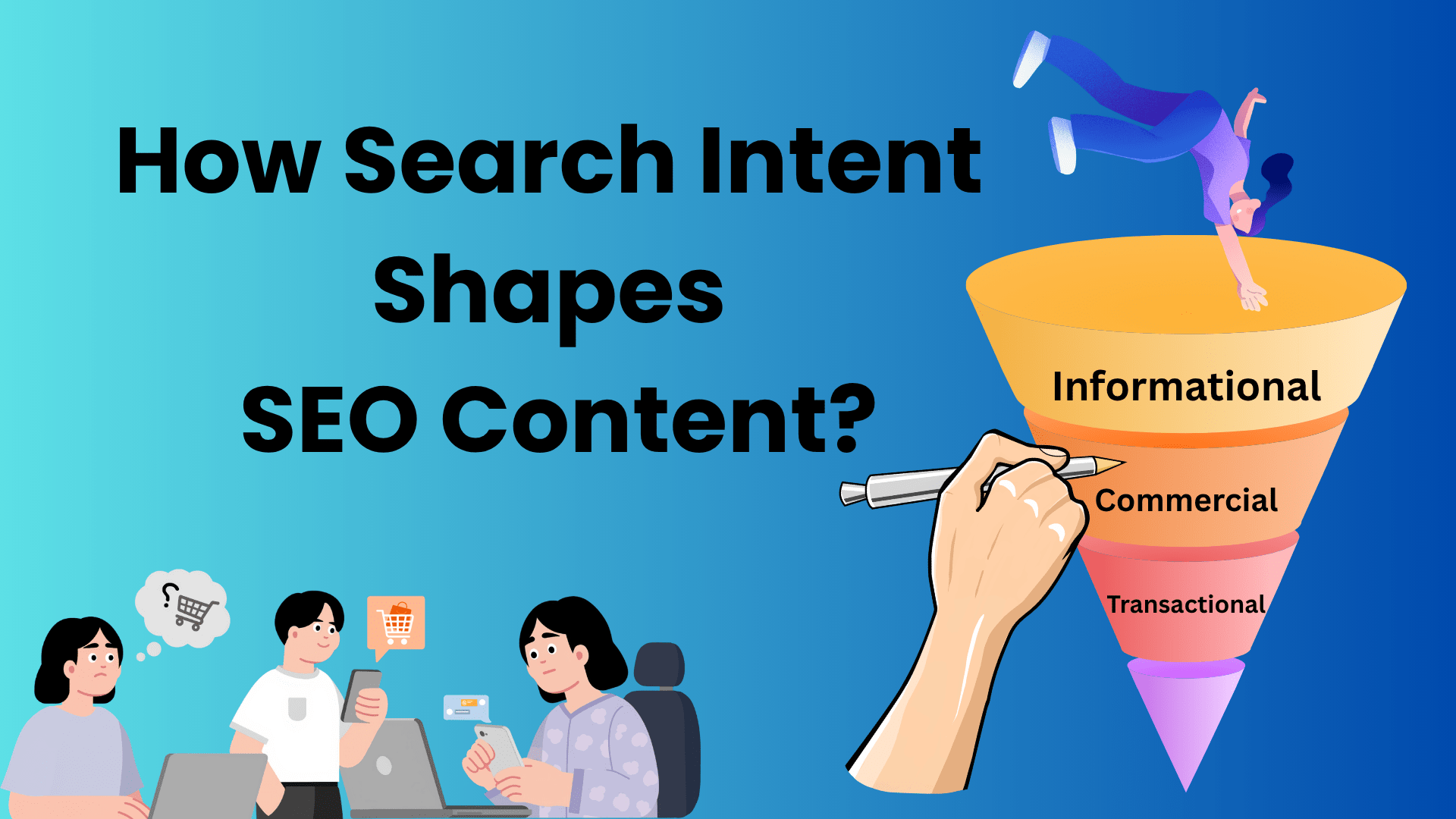
Types of Search Intent
There are 189,000 to 190,000 searches performed every second on Google, and each can be categorized into four types of search intent. Understanding these search intents is an important part of your “How to become a content writer?” journey.
Informational
When the user is looking for guidance, knowledge, or explanation, it is known as informational search intent. Almost 50-80% of Google searches have informational intent. The best way to match this search intent is to publish blog posts and articles that provide information, guides, and tutorials in a clear and seamless way.
Examples of informational search intent
- “What is a solar system?”
- “How to make a pie?”
- “Tips for improving cycling”
Commercial
When a user is thinking of purchasing something but wants to do their research first, it is called commercial search intent. Almost 14.5% of Google searches have commercial intent. The best way to serve this section of search intent is to provide a comparison and a detailed explanation of products and services.
Examples of commercial search intent
- “Best mobile for students”
- “Samsung vs Apple”
- “Top-rated health insurance”
Transactional
This search intent is the final stage of the sales cycle, when the user is ready to make a decision and purchase a product or service. Less than 10% of Google searches have transactional search intent. Providing a clear roadmap to conversion, like Buy, book, or subscribe, is the key to winning this search intent.
Examples of transactional search intent
- “Buy Dominoz farmhouse pizza.”
- “Book move ticket for XYZ movie”
- “Buy online content writing course from Udemy”
Navigational
When a user is looking for a specific brand, website, or page, it is called navigational search intent. In this case, the user already knows where he wishes to go; therefore, you should provide a clear structure and direct the user to the page he is looking for.
Examples of navigational search intent
- “Facebook”
- “Apple”
- “Instagram”
| Type of Search Intent | User’s Need | Best content format | Example |
| Informational | Know about a topic or get answers | How-to, Guide, Tutorial, FAQ, Step-by-step | “How to plant tomato” “What is AI” |
| Commercial | Research about a product or service before purchase | Comparison, reviews, Product info | “Best PC laptop 2025”, “Iphone vs Samsung” |
| Transactional | Buy a product or service | Landing page, product page | “Buy Dell H22 laptop” “Book online course” |
| Navigational | Visit a specific website | Branded content, homepage | Facebook, Ubersuggest, “Flipkart homepage” |
How to understand search intent?
You can’t always tell the search intent simply by looking at the keyword, as we have explained with an example earlier. A single keyword can have different search intents depending on the user, the device they use, and even their demographics. So, how to determine search intent? There are several ways content writers can understand search intent, and we have discussed a few of them.
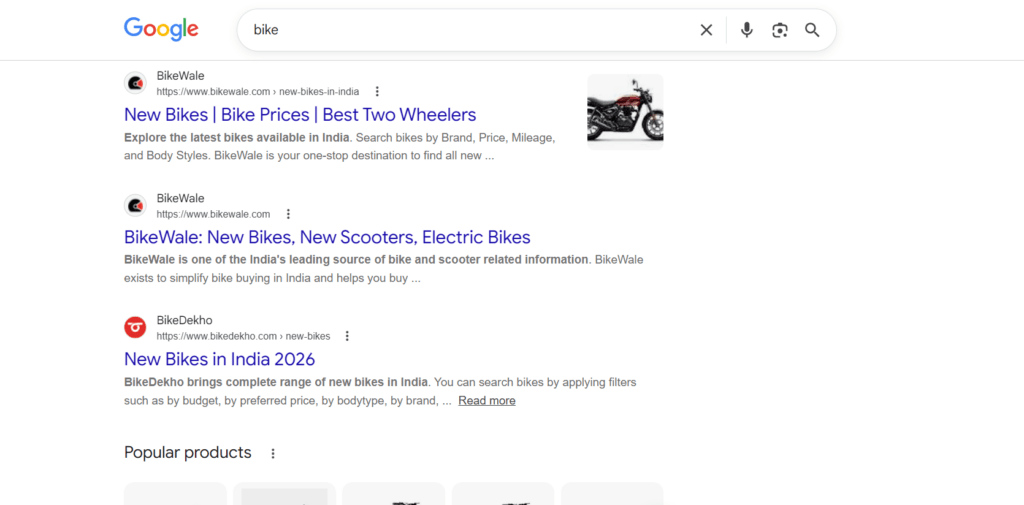
Look at search results
A simple yet effective way to determine search intent is to search for the term on Google. Going through the top search results can give a clear explanation of what search intent is being shown by Google when you type in a particular keyword. If the keyword “plants” shows plant products, then you know that the keyword “plant” has commercial search intent.
Sometimes, a keyword can also have mixed search intent. For example, when you type “fertilizer” in Google, you get mixed results; some show use of fertilizers, history of fertilizers, while others show different fertilizer products. This is the case of mixed search intent, and you have to target each intent with a different type of content, which we will discuss later.
Use SEO Tools
Another method of finding search intent behind a keyword is to simply use an SEO tool. SEO tools like Ubersuggest directly give you the search intent for the keyword you search for. And the best part is that you can use Ubersuggest for free daily, with 3 free searches per day.
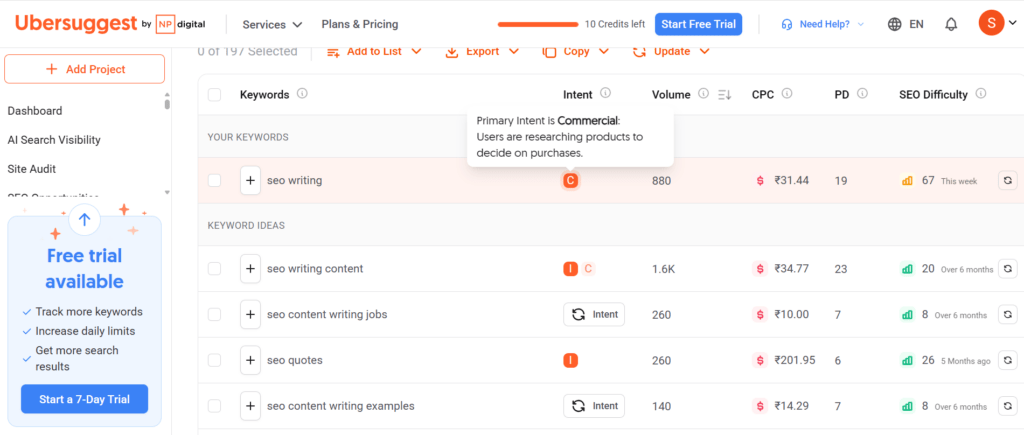
After understanding the search intent, you can use the same keyword in another SEO tool, such as “Answerthepublic,” to get content ideas that align perfectly with it. Along with Ubersuggest, you can also use Google Search Console to understand what people type in and which pages they click to get the answer they are looking for.
Use the “People also search for” option
There is no need to buy subscriptions to find search intent, as Google’s “people also search for” option can also tell you a lot about search intent. For example, when you type “Best pc games 2026” and then click on the “people also search for” option, you will get results like
- Best adventure pc games 2026
- Best free pc games 2026
- Best fps pc games 2026
These results clearly show that the search intent behind the keyword “Best pc games 2026” is commercial. So you can design your content around commercial search intent and win the rankings game.
How to optimize your content for search intent?
Now that you understand what search intent is, its types, and how to determine it, we are in the final and most important stage of search intent for SEO writing: how to optimize your content for it.
Analyze and categorize your current content
Go through your already published content pieces and categorize them according to search intent. Whether it’s the home page, product page, blog page, or about us page. An informational page about “What is SEO” will have an informational intent, while a product page “SEO course online” will have both commercial and transactional intent.
After categorizing every content piece, analyze where the gap lies. There would be many pages where the search intent wouldn’t match the content. Optimize those content pieces and align them with search intent. For example, if someone searches for “SEO course” and your product page doesn’t have a “buy course” link, the intent won’t align properly.
Make intent the structure of your content
Always be clear about the search intent before writing any content, and ensure the intent aligns with the content from the introduction to the conclusion. When you are crystal clear about the intent, you can structure your blog accordingly.
For example, if you are writing an article on “How to plant tomato plants”, the intent is informational, and thus your blog should start with a definition, followed by facts, and then a step-by-step process of planting tomatoes. Such a structure will keep users who type “how to plant tomato plants” on your page.
Follow the 3 C’s of content
To match the search intent, you should always follow the 3 C’s- Content Type, Content Format, and Content Title- in mind and plan your content accordingly. Let’s start with content type. If you search for “best gaming laptops” in the Google search bar, which content type do you see first? Is it an image, a video, a blog, or a blog page? The content type that appears in the top 5 organic results should be your target.
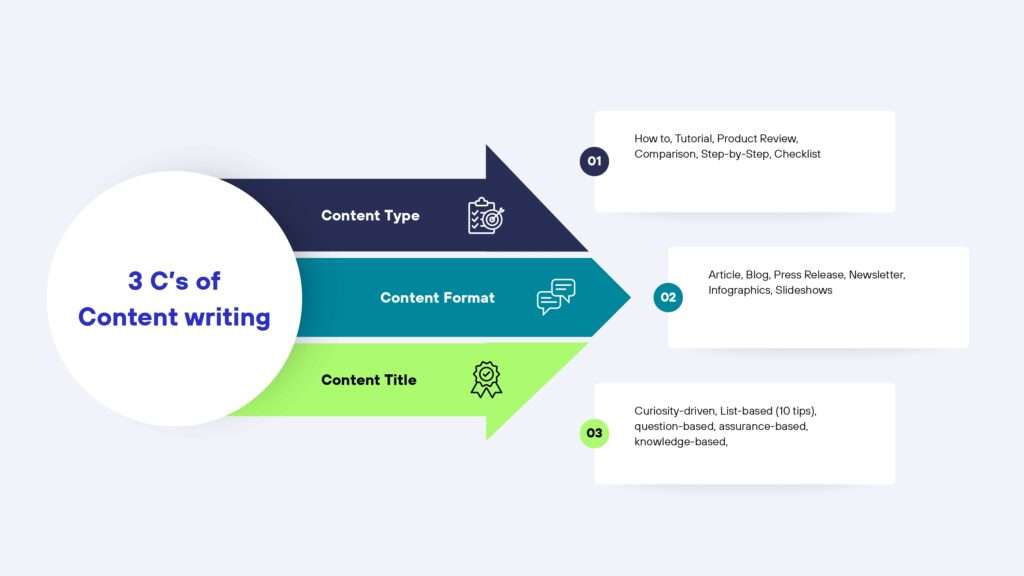
Now, let’s discuss content format. Which content format appears at the top of the search result? Is it a “How-to guide”, “list post”, “reviews”, “comparison”, or “step-by-step tutorial”? Target the top results to align with search intent. Finally, the content title, which means the type of title you see in search results, does it make users curious or provide assurance? Design your title accordingly.
Cover the complete topic
If you really wish to optimize your content for search intent, you should always cover the topic in full. You can explore various subtopics to add to your main topic so the user won’t have to go anywhere else for any information after reading your content.
To find subtopics, visit the top-ranking pages and see what else they cover. For example, for the keyword “Best dumbbells online”, an XYZ website appears in the top 3 search results. Now, when you visit their page, you see, along with the list of best dumbbells, they have listed “adjustable dumbbells”. Now, you have got a subtopic.
Conclusion
Using keywords in your content without understanding search intent is like serving someone any flavor of cake just because they browsed through your cake display. Understanding keywords is the first step towards understanding your customer, but it’s not the last. If you really want your audience to leave your website satisfied, you need to understand the search intent.
A better understanding of both “What” and “Why” of the customer is the only way to win the neck-wrenching race of ranking and build trust, credibility, and authority in your niche. So be clear about your intent to write and your audience’s intent to search, and level up your SEO content writing game.
FAQs
Why is search intent important for SEO writing?
Search intent is important for SEO writing because Google ranks content that better aligns with users’ needs. Search intent helps content writers bridge the gap between the user’s search intent and the information provided in the content.
Can a single keyword have different search intents?
Yes, broad keywords can have two different search intents. For example, the keyword bank can have both transactional intent (if someone is looking to open a bank account), and informational intent (someone is trying to understand a financial institution).
Should I target multiple search intents through a single piece of content?
No, you should always structure your content around a single search intent. Targeting multiple keywords can confuse both users and the search engine algorithms.
Which one is more important- keywords or search intent?
No, both keywords and search intent are important for better performance. If keywords tell you what people are searching for, search intent tells you why people are searching for it. You should make the most of both SEO aspects to boost your rankings, traffic, and sales.