AI is growing exponentially. ChatGPT, Claude, and Perplexity have a combined user base of over 1.2 billion. Google AI Overview alone has 2 billion monthly users globally.
For content writers, this shift raises an important question: how can they write content that AI search engines cite?
The problem is that most content writers look for quick fixes, like adding FAQs or using bullet points, to make their content relevant in the AI environment. Writers actually need a complete AEO content strategy that includes planning, writing, and updating.
A well-defined AEO content plan makes your content useful, structured, easy to scan, and well supported. As a result, your chances of being sourced by AI increase, and that’s what we’ll learn today.
But first, let’s understand what AEO content strategy means.
Table of Contents
What is an AEO content Strategy?
It’s a digital marketing strategy that involves planning, writing, and updating content so AI models like AI Overview, ChatGPT, Claude, and Perplexity use it as a source to answer questions.
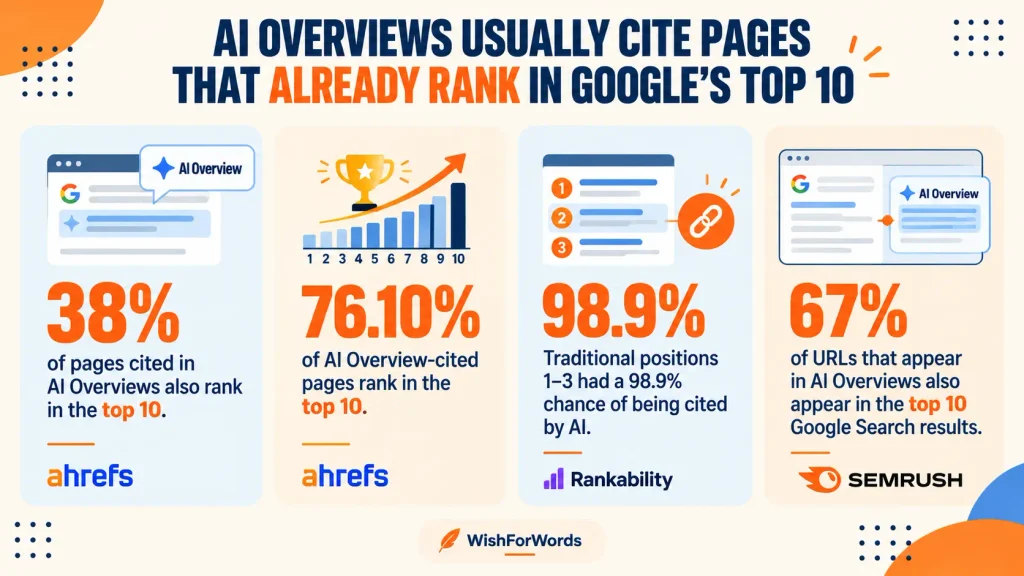
An AEO content plan builds on the same SEO structure that helps you rank. And why am I saying this? Because a website ranking at the top of search results has a 43.2% chance of being cited by ChatGPT. This is not it; here is what the most research says about how ranking in search results increases the chances of AI citation
- 38% of pages cited by AI Overview rank in the top 10 search results
- 76.10% of pages cited by AI Overview rank in the top 10 search results.
- 67% of the URLs cited by AI Overview also appear in Google’s top 10 search results.
- Traditional ranks 1-3 have a 98.9% chance of getting cited by AI
So, building an AEO strategy for your content doesn’t mean ditching your existing SEO strategy. You just need to refine your existing SEO strategy while keeping in mind how AI-powered search tools scan, interpret, and cite content.
How to build a complete AEO strategy?
Most articles I’ve read on AEO content plans offer a few tips for optimizing content, like including BLUF, writing short paragraphs, or using listicles. While helpful, they don’t give you a complete picture of how to build an AEO content strategy from scratch and publish an AEO-friendly blog.
This is why we have divided the complete AEO strategy into three parts: Plan, Write, and Update. Let’s explore each of them in detail with practical examples.
How to Plan Content Strategy for AEO?
How do you plan traditional SEO-optimized content?
Most content writers go through these phases-
- Understanding the audience and topic
- Keyword research
- Competitor analysis
Your existing content-planning process still applies, but you need to adjust each stage.
Here is what changes at every stage-
1. Understanding the audience and the topic
| Traditional SEO | AEO Consideration |
| Find topics with search volume, understand search intent, and decide what to cover. | Identify the specific questions one can ask, including follow-ups while searching for the keyword, and choose topics where you can offer expertise |
Example
Topic: Best Blogging Platform
Traditional SEO
- What the audience is looking for: A list of easy-to-use blogging platforms
- Search Intent: Commercial. Readers are comparing platforms before deciding.
- What needs to be covered: different blogging platforms, pricing, customization.
AEO Consideration
- Which blogging platforms are best for someone with no technical expertise?
- Can someone build a blogging website for free?
- What budget should someone set to build a blogging platform?
- Can I include my personal experience of building a blogging website in this topic?
Important: If you already do a detailed SEO analysis for your content, it already covers the AEO aspect
Keyword Research
Combine natural language prompts (LLP) with your existing keyword research for the best AEO content strategy.
| Traditional SEO | AEO Consideration |
| Search Volume, Keyword Difficulty, Short keywords, tools used- SERP analysis, Keyword tools, one intent behind every keyword | Conversational prompts, follow-up questions, and entities; tools used: Reddit, Quora, AnswerThePublic, Google’s People Also Ask; map the entire journey, like how to, when, where, how, why. |
Example- Best Blogging Platform
Traditional SEO
- Check volume: the keyword best blogging platform has 320 volume and difficulty is 35.
- Choose a primary keyword like Best Blogging Platform
- Make a list of secondary keywords like easiest blogging platform for beginners, best free blogging platforms, cheapest blogging platform.
- Use related terms like Wix, WordPress, Blogger, WordPress.com vs WordPress.org
AEO Consideration
- Use conversational prompts like which blogging platform do professional bloggers use, should a content writer use WordPress or Medium, is WordPress better than Squarespace for SEO?
- Consider follow-up questions like how much it costs to host a website per year and whether I need coding skills. How to publish the first blog? Is website maintenance difficult?
- Search the keyword on Quora and Reddit to see what people ask about the best blogging platforms, then answer it better in your blog.
Tip: Use variations of keywords instead of repeating a single primary keyword.
Competitor Analysis
Run your existing competitor analysis during the planning phase, but go beyond the first page of Google search results for an AEO content plan.
| Traditional SEO | AEO Consideration |
| Review the top 10 ranking pages for keywords used, backlinks, content length, on-page SEO, and mapping gaps by identifying keywords they rank for that you don’t, headings, and keyword placement. | Review all websites cited by AI, even if they don’t rank in the top 10: how directly they answer the question, whether they’re up to date, whether they answer questions poorly or without examples, and whether they use lists, bullet points, or FAQs. |
Example: Best Blogging Platform
Traditional SEO
- List the blogging platforms competitors have covered
- Note down their headings, keywords, and keyword placement
- Find content gaps like a missing pricing section or comparison
AEO Consideration
- Run keywords in AI models and find what competitors not ranking in the top 10 are covering
- Look for freshness in content: last updated, old screenshots, outdated stats.
- Analyze their content format: listicles, bullet points, paragraph length, and how soon they answer a question under a section.
- Is there scope to add practical examples or original comparisons?
How to Write Content for AEO?
Now that we have completed the planning stage of AEO content strategy, we will move towards the next phase: writing.
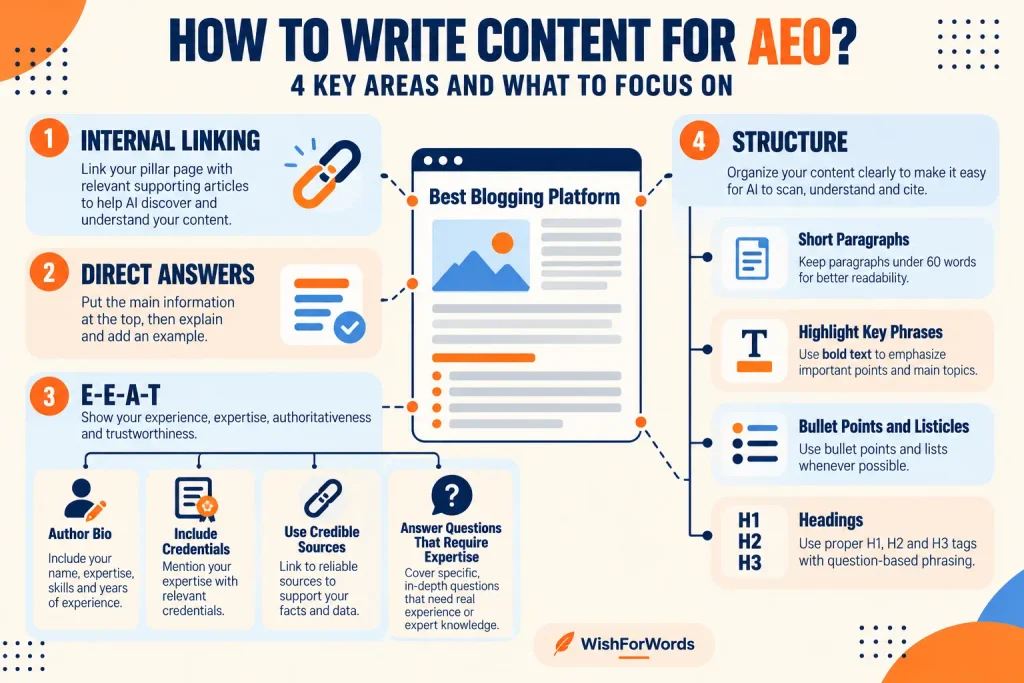
When writing content, whether it is a blog, product page, or About Us page, keep these 4 tips in mind to help AI models like ChatGPT, Perplexity, AI Overview, and Claude cite you.
Important: There’s no single way to get cited by AI; it’s a mix of multiple metrics, writing style, content structure, and your presence on the digital platform.
Internal Linking
Google’s guidance on AI features and Your Website clearly states that internal linking makes it easier for users to find your content on your website. This means traditional SEO practices still help in AI search visibility.
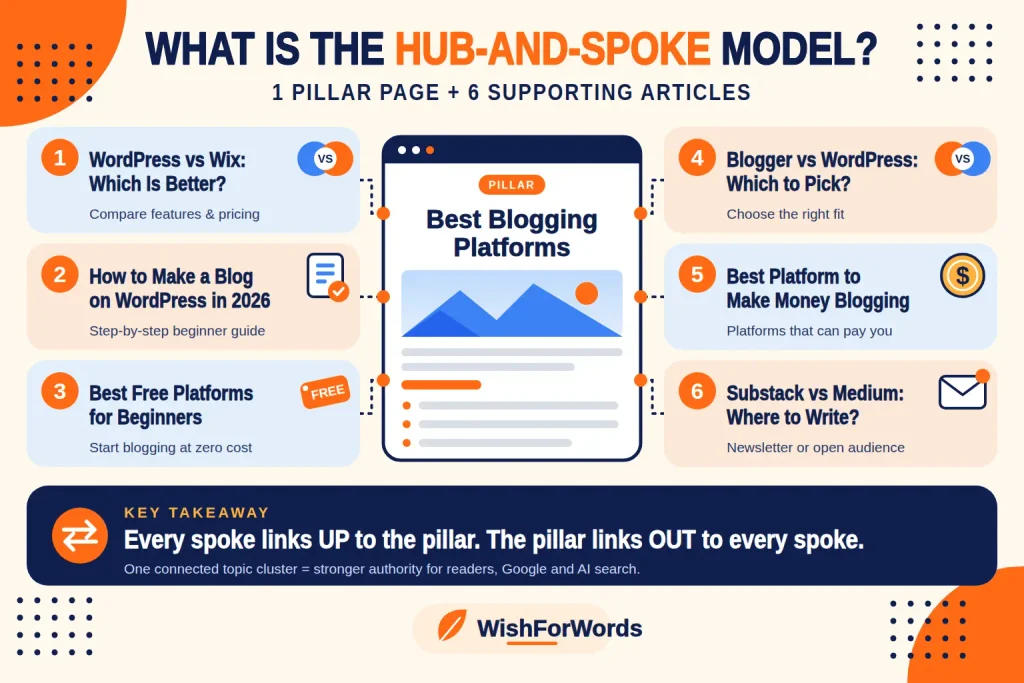
Build pillar pages and then link them with supporting cluster pages within your website. This builds internal linking, making your content easy for AI to scan and understand.
For example, you wrote an article on “Best Blogging Platform”. Consider it your pillar blog, and then write another article, “WordPress.com Vs WordPress.org” and link it to your pillar page.
Any AI model has three stages when it comes to content:
- Discovery
- Understanding
- Citation
Internal linking helps with the first two.
Internal linking gives AI crawlers a map of your website. When an AI model sees one page linked to another, it understands the relationship between them and starts seeing your website as a set of concepts rather than separate files.
Fact: Websites that did better in AI search had 2X better internal linking
Direct Answer
Put the main information at the top of the paragraph, under your heading. This makes it easy for AI to find the important information instead of digging through a 200-word story to find the real answer.
Here is how you can do it-
- Use question-based phrasing in headings
- Write the direct answer first
- Provide Explanation
- End it with an example
Let’s understand this with an example-
Topic: Best Blogging Platform
“Does building a website on WordPress require coding knowledge? (question-based phrasing)
No, you don’t need a coding language to build a WordPress website. You can do about 80% of WP website creation without coding; for the remaining 20% of advanced design, you will need code. But you won’t need that level of advanced design (direct answer).
You can install pre-built themes and page builders like Elementor to build your website with a drag-and-drop method. You can also add features with plugins like Yoast SEO, Mailchimp, and Table of Contents (explanation).
I have even built this website, wishforwords.com, without writing a single line of code. I used OceanWP as the theme, Elementor as the page builder, and a couple of plugins for additional features. (example)“
E-E-A-T
E-E-A-T (Experience, Expertise, Authoritativeness, Trustworthiness) isn’t new; we have been doing it for SEO. The same can apply to an AEO content strategy, but with a couple of new additions and considerations.
Author Bio
When you include an author bio (like I did at the end of this article), you add credibility and expertise, and you label the content as coming from an authentic source. Here is what you should include in your bio-
- Name
- Expertise
- Skills
- Years of Experience
Include credentials
Mention your expertise in the first few sentences. For example-
“As a content writer with 9+ years of experience, I decided to go with WordPress for my blog website”
What does this add to your content?
- Authority
- Expertise
- Freshness
- Real-life examples
These signals establish you as a credible source for AI models, which is what they look for. But don’t do it everywhere; make it feel natural.
Use Credible Sources
Linking your website content or blogs to credible sources makes it easier for AI models to verify your research and confirm your information is real. So, include data, stats, and facts in your content and link them from credible sources.
Answer Questions That Require Expertise
Most AI models, like ChatGPT, Perplexity, Claude, and AI Overview, can answer simple questions from their training data without citations. Here is an example-
But when the question gets specific and requires expertise, AI models need citations, like this –
So, along with generic questions, include expert questions in your content as well.
Structure
Short Paragraph
Short Paragraphs under 60 words are more likely to be cited. When AI scans content, it looks for a text block that answers a question. So when you put one answer into a short paragraph, it becomes easier for AI to scan, understand, and cite.
I use a 60-word rule for my paragraphs. If a paragraph goes beyond 60 words, I split it into two.
Highlight Key Phrases
AI models like ChatGPT, Perplexity, and Claude consider highlighted text as core concepts, and bold text directly signals LLMs that this particular content is the main subject.
AI models look for “snippable content” and when bold text answers questions like “how to” “why is”, it becomes ideal text for citation.
Bullet Points and Listicles
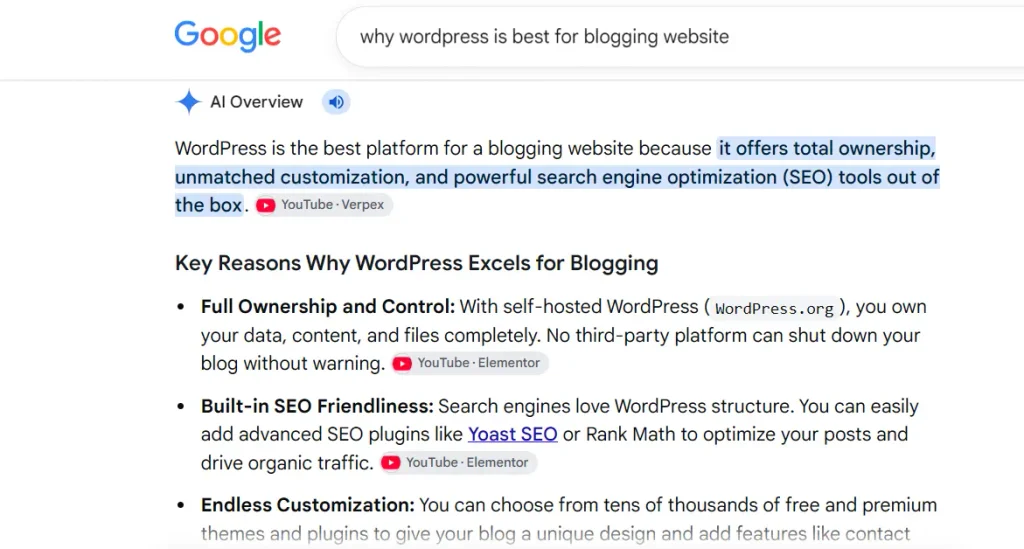
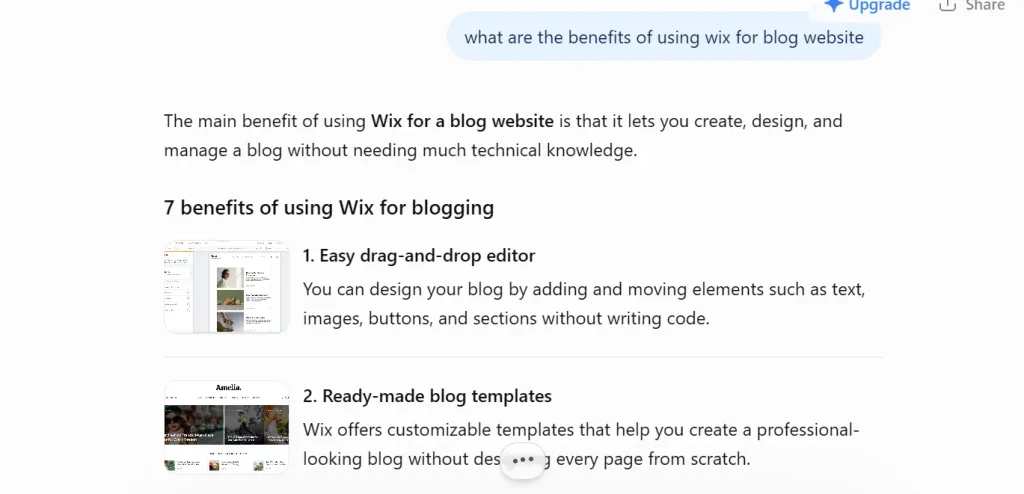
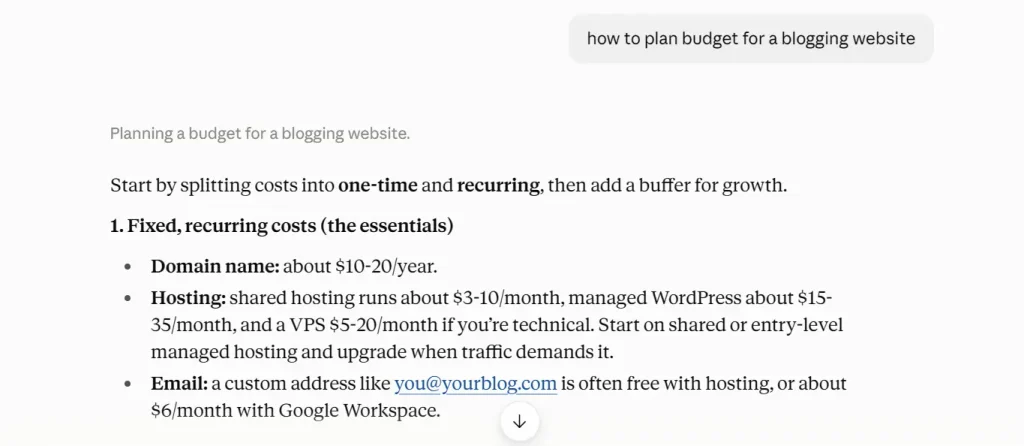
Here are four three prompts and their answers by AI models- Claude, ChatGPT, and AI Overview-
AI Overview
ChatGPT
Claude
What is common between them?
They all have answered my questions in the form of listicles and bullet points. Listicles dominate AI citation at 48% since AI models are programmed to cite structured content.
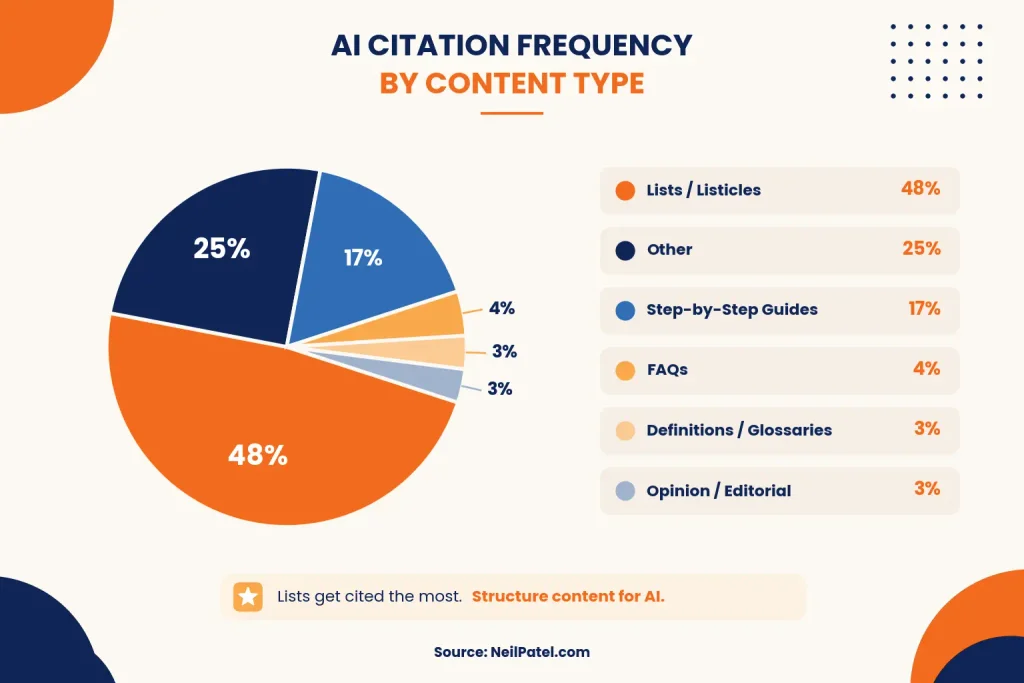
This clearly shows that AI prefers bullet points and listicles because, in that format, LLMs don’t have to sort through dense narrative prose. So, include bullet points and listicles whenever possible.
Headings
Using proper heading tags like H1, H2, and H3 makes your content easier for AI models to scan because LLMs use pattern recognition rather than reading like humans.
AI models use headings to understand where one section ends and the next begins. Without these tags, AI models have to use more computing power to scan your text, which they try to avoid.
Beyond this, you should also use question-based phrasing: Use conversational language in headings like “Which blogging platform is best for students?” instead of “Blogging platforms for students”
How to Update or Optimize Content for AEO?
Now that you have planned, written, and published your content according to your AEO content plan, it’s time to move to the third phase of AEO content strategy- Update and Optimize.
Here is what you can do after hitting the publish button-
Maintain freshness
Among the multiple trust signals AI models use, recency is one of the most important. When you update your content regularly, it stays relevant and aligned with current user intent, so LLMs are more likely to choose it.
That is why freshness matters for AEO. But what to update in your content?
- Update old data
- Change scenarios
- Add new findings and facts
- Include new FAQs
- Change prices
- Add new expert analysis
- Add new surveys
Build Content Cluster
Once you publish a blog on a key topic, build a content cluster because it builds topical authority, which in turn makes your website a credible source AI models can cite.
In the hub-and-spoke model, you first publish a blog on a key topic, then explain multiple subtopics through dedicated blogs. Here is how you can do it-
Check Whether it is Working
Simply type customer-intent questions related to the topic you have covered in ChatGPT, Claude, and AI Overview. Check whether the answers provided by these AI models cite your website or not. Also, check Google Search Console for traffic from AI models.
This is simple, yet many people don’t do it after building and learning how to build a complete AEO strategy and publishing their content.
FAQ
How to optimize content for ChatGPT answers?
To optimize content for ChatGPT answers, include listicles, bullet points, and images. Also, you should write short paragraphs, use both internal and external linking, and try to answer the question in the very first sentence.
How to align SEO content and AEO strategy?
SEO and AEO strategies aren’t entirely different. Instead, AEO builds on the SEO framework. Many SEO practices like short paragraphs, author bios, headings, and internal linking work for AEO too. So keep your existing SEO strategy and include AEO considerations like bullet points, community presence, and BLUF in your content for better AEO visibility.
Why does AEO matter?
It matters because ChatGPT handles 2.5 billion prompts daily, and AI Overview appears for almost half of Google search queries. How people find products, information, and answers is changing, and if digital marketers and content writers don’t adapt their strategy, they will be left behind.
Which tools are best for conducting keyword research for AEO?
The best way to conduct keyword research for AEO is to use traditional SEO-based keyword research, find long-tail keywords, map search intent, and use AI models to understand keyword mapping. Some popular tools you can use are-
- Ahref
- Semrush
- Answerthepublic
- People Also Ask For
- Ubersuggest