Not seeing your blog rank even on the 3rd, 4th, and 5th pages of Google search results is obviously disappointing. I have been there and felt the pain.
It hurts more especially when you have done extensive keyword research, worked on the blog’s structure and information for hours, and feel confident about its optimization.
You feel like your hours of work, SEO theory, and writing have gone to waste. This is the case for many content writers, who are still unable to identify the main issue preventing their blog posts from ranking in search results.
No need to worry. Here, we will discuss the top 5 common reasons why most blogs with proper SEO optimization and a carefully crafted structure fail to rank.
Table of Contents
1. You are Targeting the Wrong Keyword
Do you choose keywords just on the basis of keyword difficulty shown on different SEO tools? That might be the most important reason why your blog posts aren’t ranking.
Filtering keywords based on keyword difficulty is a good starting point, but more work is required. When you have made a list of “low keyword difficulty” keywords, you should search each one of them and see which websites are ranking on the first page.
For analyzing the top-ranking websites, you should use a Chrome plugin like Ubersuggest, Moz, or Keyword Surfer.
If there are low DA-PA websites ranking on the first page for the keyword you have searched, it means you have a chance to rank on that keyword. If not, skip the keyword and search next.
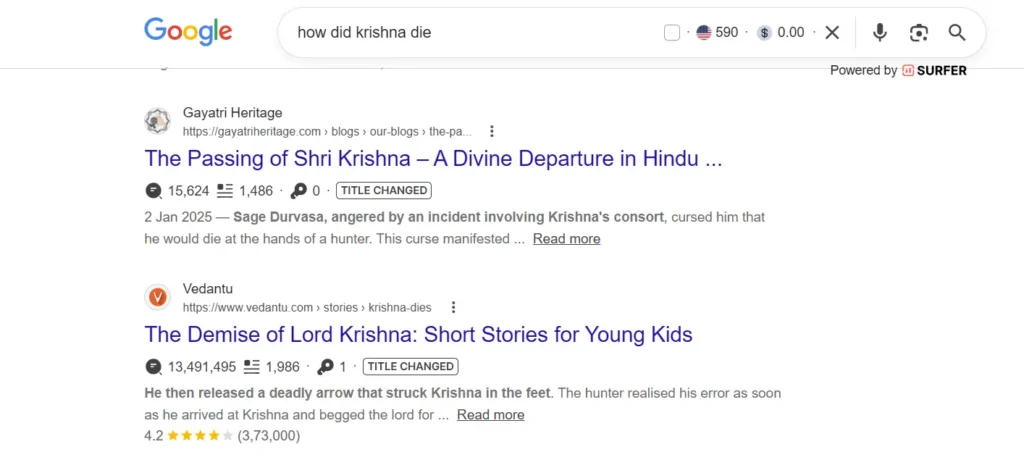
As you can see in the image, for the keyword “how did Krishna die”, there is a weak website ranking on the first page. So, clearly, this increases the chance of my blog ranking on the first page, and I can target this keyword.
2. Copying Everything
How do you approach a topic while writing a blog on it? You open multiple tabs in Chrome on the same topic, take words from every blog, and build a well-crafted piece of content you think will rank?
There was a time when this traditional approach worked, but it no longer does. Google has invested billions to ensure that every query gets the best search results, not just copied content from other websites.
So, instead of just copying content from other blogs and writing it in your own words, you should follow the “UAE” approach.
Understand
Understand the topic in depth. Watch YouTube videos on it, read research papers, and go through multiple blogs on the same topic.
This will give you a clear understanding of the topic, and then you can write a blog that includes the finest details of the topic, not just copied content. Google knows which blogs are copied and which have unique, original content.
Analyze
If you are working for a company, try organizing a meeting with the sales team and write down the real pain points or the practical benefits of the products and services they are offering. This way, you can have real and unique content that even Google can’t ignore.
💡Important – Sit with the sales or marketing team, choose a topic and collect information.
Expertise
Try building expertise on the topic, or the company’s product or service you are writing about. Even when you are not assigned a task, make a habit of reading about it and going through its facts, data, and more. This way, you can include your own ideas in the blog.
3. Not Understanding the Intent
Have you ever analyzed the search intent behind a keyword before writing a blog post on it? If not, this might be why your blog post isn’t ranking on Google.
Finding the search intent isn’t that hard; just enter the keyword in the search bar and see what the ranking websites are talking about.
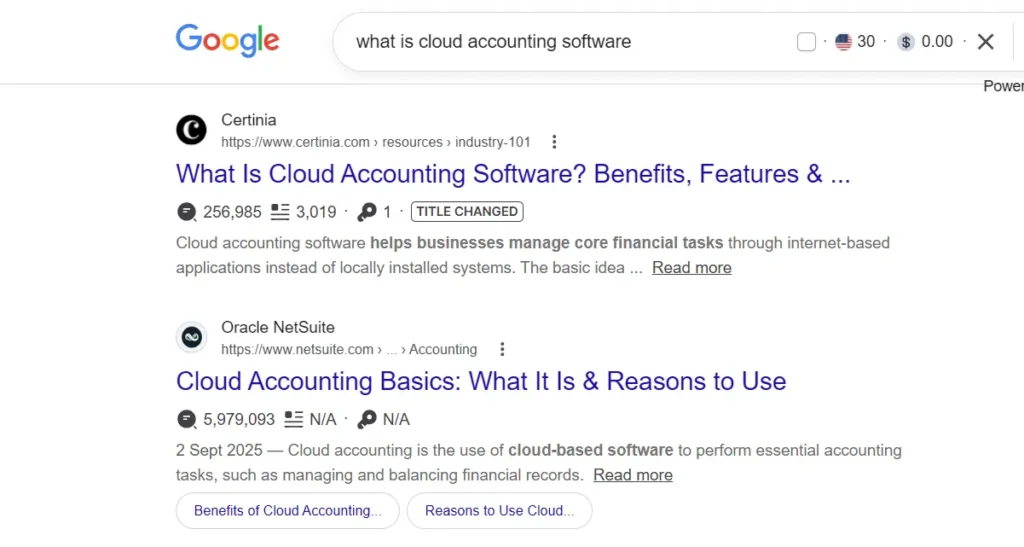
For example, if I type “What is cloud accounting software?”, Google shows blog posts with information on Cloud accounting software, not product information. Why? Because the search intent behind this keyword is information.
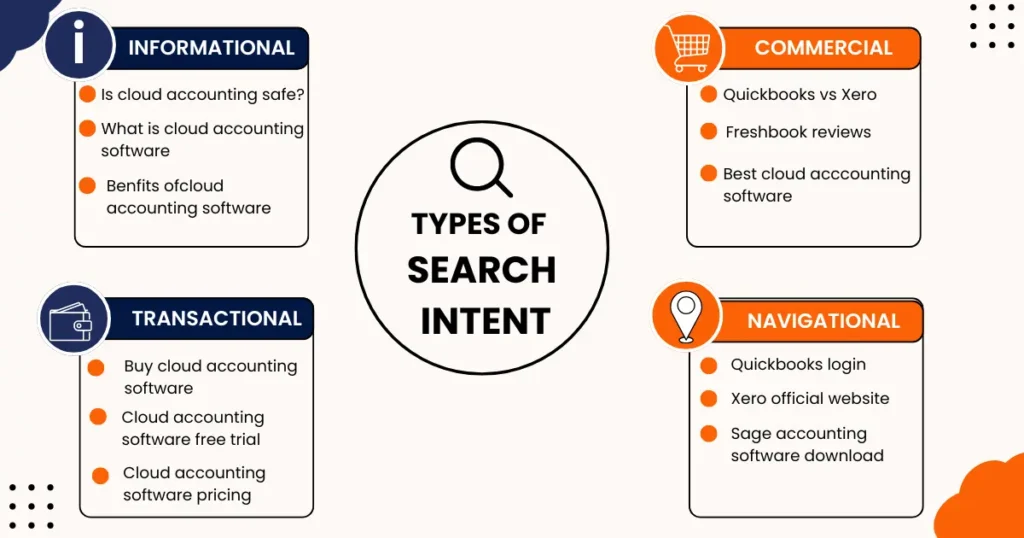
Always be clear about the search intent of the keyword you are about to use. Draft the article around that intent only. This way, you wipe out one important obstacle that might be stopping your blog from ranking on Google.
4. No on-page SEO
The word on-page SEO might sound like a project on its own to content writers who haven’t worked on SEO much. But it’s much easier than it sounds, especially for writers.
Although there are various aspects of on-page SEO to take care of, as a content writer, you have to focus on only the selected ones. Here is what you need to take care of in your on-page SEO-
- Heading – Always use H1, H2, and H3 tags in your blog. This gives your blog a proper structure and makes it easier for Google to understand your topic and subheadings.
- Linking – You should always link to your own blogs internally. This helps Google know your website’s map, and it even helps you build authority in that specific niche.
- Meta Description – Always write an engaging meta description and include your keyword once in it. Keep it under 160 characters and simple.
- Image Alt Text – Whether you are using a featured blog post image or images inside the blog, make sure to write what the image is about in the alt text section.
💡Important – Make an on-page SEO checklist and always use it before publishing your blog.
5. No Authority
How many blogs have you published in the same niche? You need to build authority first before even thinking of ranking on Google. Authority can be built by covering a broad range of topics related to your niche.
This way, Google understands that this specific person has skills in a particular niche and his blogs deserve to be shown to the users.
It is advisable to always cover a specific niche, because if you write about cricket today and then religion tomorrow, Google will get confused and will never be able to understand your expertise.
💡Important – Always choose very specific neeche like SEO writing, LinkedIn Ghostwriting, Blogging.
Try building an authority first. If you are a new content writer or have just started publishing blogs a couple of days ago, you need to wait and stay consistent. Many new content writers think that they will start ranking on Google from the very first day.
You can try this yourself: type any medical-related issue on Google, and 99% of the pages you will see on the first page will be dedicated to medicine, diseases, and research only.
Conclusion
Ranking on Google isn’t an overnight task; it requires patience, consistency, a focus on quality over quantity, and an understanding of how Google works.
Google is smart enough to know which is the most relevant, unique, and expert answer to any query, and you have to offer the same. Just keep adding the five points in your current content strategy, and you will soon see better results.