Starting a blog in 2026 is easier than ever, but most writers get stuck when it comes to choosing the best blogging platform. The question “How to choose the best blogging platform” should be answered carefully, as the platform you choose decides how you grow, rank, and gain traffic.
The goal of every blogging platform is the same- give you a platform to write, publish, and rank.
But each has its own unique advantage, making them perfect for different groups of writers and their respective goals. And with so many options, choosing the best blogging platform in 2026 can become overwhelming.
This is why we have crafted this comprehensive guide for every type of writer. It will help them choose the best platform as per their needs and goals.
Table of Contents
What are Blogging Platforms?
A blogging platform is software or a tool that allows you to write, edit, and publish blog posts, either for a fee or through a free model.
With a blogging platform, you don’t need to build a website from scratch (through coding), as the platform takes care of the technical aspects while you have to focus on writing, editing, publishing your blogs, and designing the platform if the platform allows.
How to Choose the Best Blogging Platform?
Just going through a list of the best blogging platforms won’t make everything crystal clear for you. Every blogging platform has its own unique features, which make it ideal for a specific group of people.
For example, if you only wish to work on a platform where all you have to do is write, edit, and publish, then Medium is a good option. But if you want to build a future in blogging and earn money through a professional blogging website, then WordPress.org is the best choice.
💡Important: Never choose a platform because of its popularity; choose it only if it suits your needs.
So before moving on to the list of the best blogging platforms, analyze these three things and make the decision of choosing the best blogging platform easier for you-
- Goal- What do you wish to achieve with blogging? Do you wish to build an audience base, connect with like-minded people or businesses, or earn money? Be clear about your blogging goal before finalizing the platform.
- Control – How much control do you want on your blogging platform? Do you wish to just write, edit, and publish, or do you want a custom design and templates for your blogging platform? So make sure whether you want to design or just write and publish.
- Budget – Do you wish to spend a small amount on a blogging platform, or do you want to enjoy blogging without spending a single dime? We have both types of blogging platforms in our list. All you have to do is just be clear about how much you wish to spend.
Top 10 Blogging Platforms in 2026
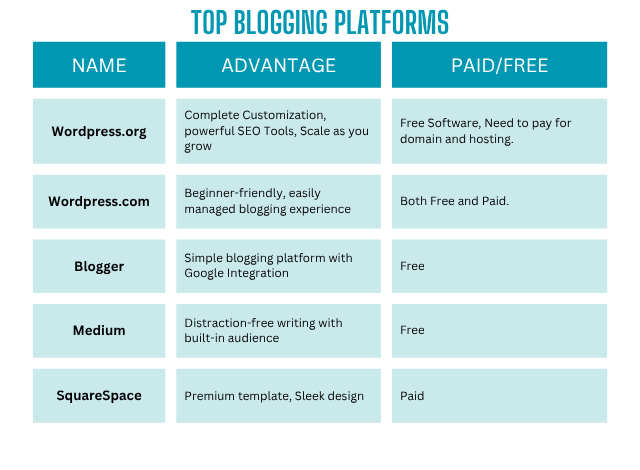
1. WordPress.Org
If you are really serious about blogging and not doing it just for fun or time-pass, then nothing beats WordPress.Org.
Almost all the professional writers who take blogging seriously use WordPress.Org. Why? This platform offers many benefits you won’t find anywhere else. I have been using it for almost 6-7 years, and the results are exceptional.
It is a self-hosted platform that offers complete control over your website. Whether it’s plugin installation, customization, or monetization, you get full control.
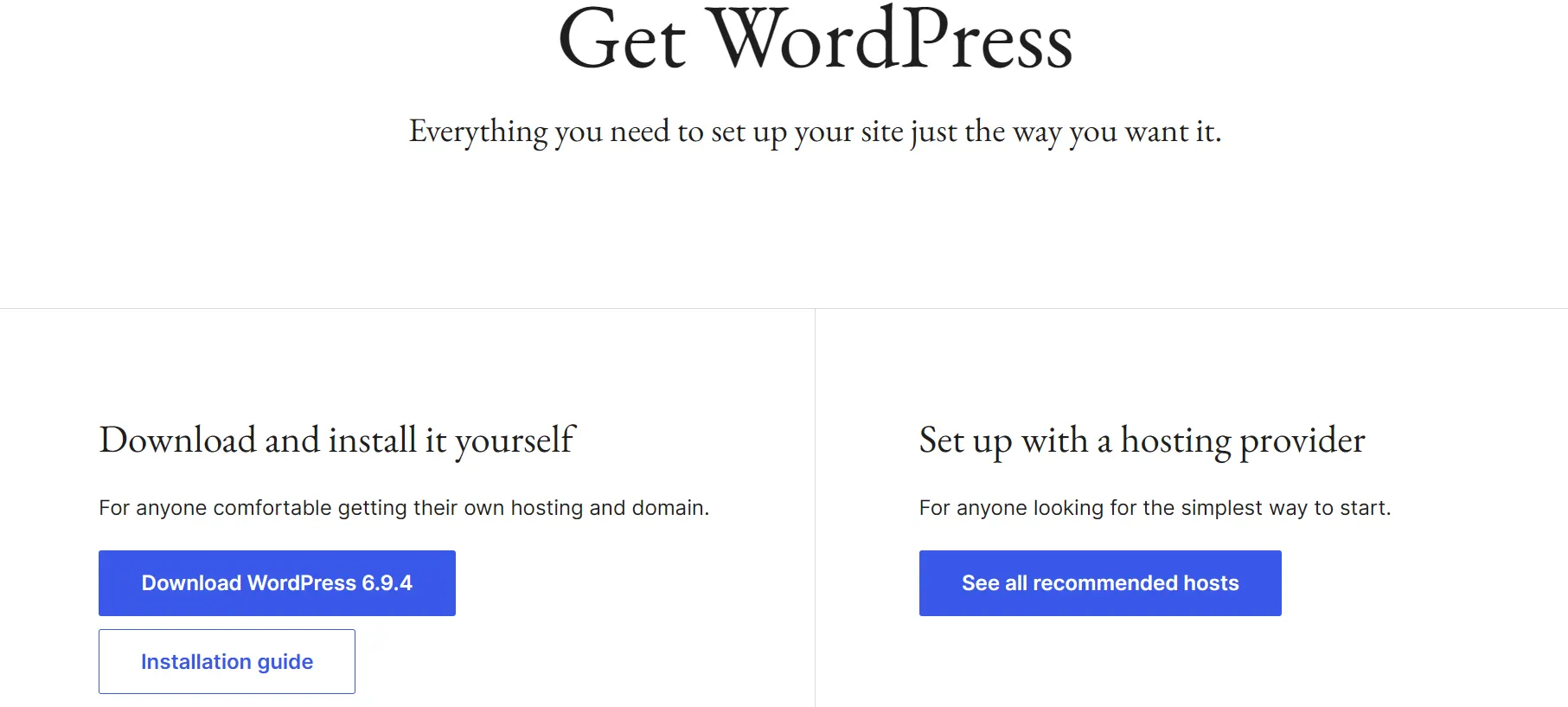
To use WP.org, you need to buy a hosting plan from platforms like Bluehost and a domain name. Then you would have to install WordPress.org, which is quite easy and offered by the hosting provider.
But if you have never worked on a Content Management System like WordPress, the long list of features, flexibility, and control can turn out to be overwhelming for you. So, how do you decide whether you need WordPress.org?
💡 Important– Nothing beats WordPress.org in terms of SEO, customization, and monetization.
Ask yourself the questions we are about to mention and decide whether you need them. If yes, go for WP.org; if not, there are other options.
- Complete Control– If you wish to customize every aspect of your blog post, from the placement of images and fonts to plugins and the user interface, then you should go with WordPress.org.
- Integration and Monetization: If you wish to monetize your blog and want third-party integrations with payment processors, a professional email ID, and more, then you should go with WordPress.org.
2. WordPress.com
This is a hosted version of WordPress.org, and if you wish to start on an easy note without taking responsibility for technical setup, hosting, or purchasing a domain name, WordPress.com is the right choice.
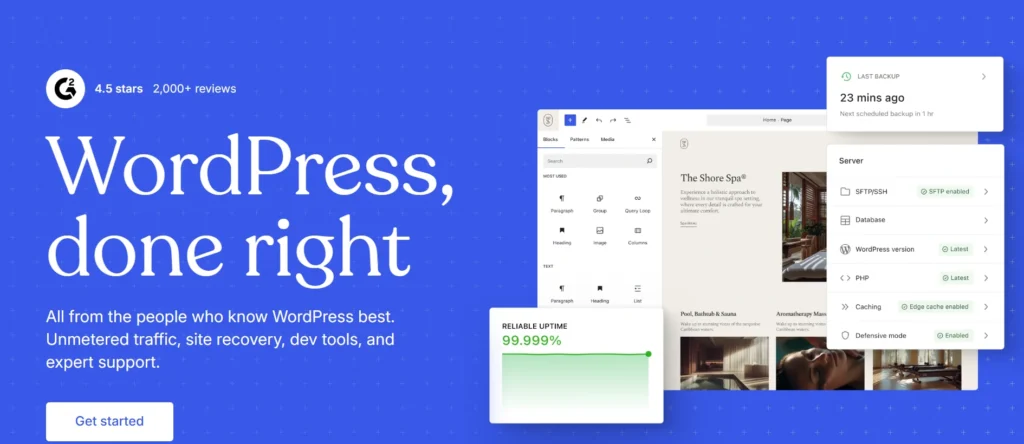
It is an ideal platform for bloggers who have published their first blog yesterday and wish to work on a beginner-friendly platform. But WordPress.com comes with its own set of limitations. The level of customization is limited, and the same goes for monetization.
It is a good platform to start with, but if your blog grows, you might need to switch to .org to take advantage of better opportunities. In order to write your first blog on WordPress.com, you just need to follow the steps below-
- Sign up and create an account on WordPress.com by clicking on Get Started
- Choose a free domain that you would like- XYZ.wordpress.com
- Select the free plan
- Choose a template, click on post>Add New Post
- Write your first blog and hit publish
3. Blogger
This is one of the easiest and oldest blogging sites, launched way back in 1999 by Pyra Labs. Even in 2026, it received millions of visitors, making it one of the best blogging websites.
It is a simple, easy-to-use, and secure platform if you wish to start your blogging journey without spending any money and without putting in much effort apart from writing and publishing. You just need a Google account to sign up and start blogging on Blogger.
Blogger is so simple to use that even first-time internet users can learn how to write and publish blogs on it in a couple of days. Yet, it also comes with its own set of drawbacks. There is no customization, it’s sometimes hard to index, and it’s not a scalable platform.
If you are new and want to start blogging in a simple, safe environment where you just write and hit publish, blogger.com is the best choice for you. Just follow these simple steps to start blogging on Blogger-
- Sign in with your existing Google account or Gmail credentials.
- Give a name to your blog
- Create your web address, for example, XYZ.blogspot.com
- Enter your Author name
- Then click on New Post on the left-hand side
- Click Preview and then hit Publish
4. Medium
If you wish to build a strong audience base, appear in search results, and just want to deal with the “Write and Publish” aspect of becoming a blogger, then Medium can be your best blogging platform.
Consider Medium like a blogging version of X. You just have to follow a simple sign-up process, add your name, dp, and you are all set to publish your first blog. The UI is quite simple, so you can avoid all the noise and focus on just writing and getting exposure on Medium.
💡Important– Medium never offers do-follow links if you are going to use it for your backlinks.
The good news is that Medium also allows its writers to earn through the Medium Partner Program, where you get paid based on replies, follows, and reading time. Most writers earn between $10-$100 per month, while a few earn in the thousands.
Medium articles get huge exposure and rank well on Google. But this doesn’t mean it has no drawbacks. You don’t have any domain, and you can also lose your audience list if Medium changes its algorithm overnight. It has limited audience analysis and volatile monetization.
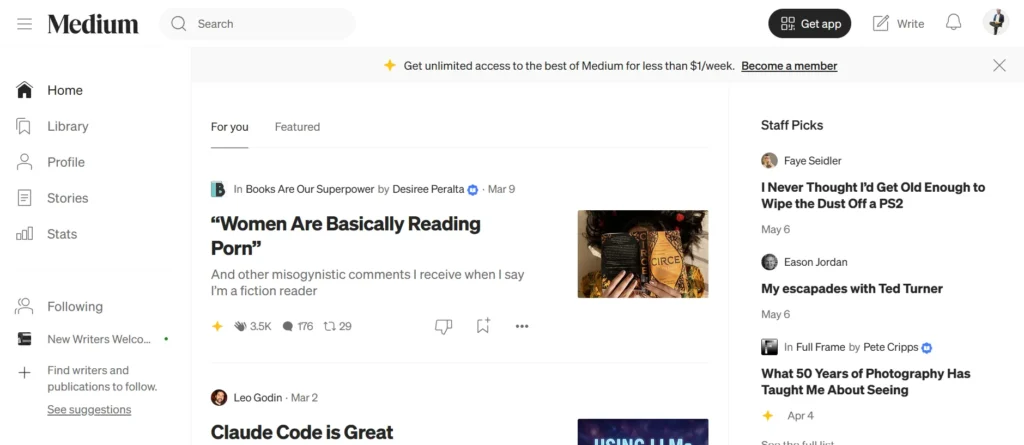
If you want a built-in setup where your blog gets exposed to millions of readers and that too without any technical setup, then Medium is the right choice for. Although Medium pays its writers, you can’t carry it as a main earning source for your writing career.
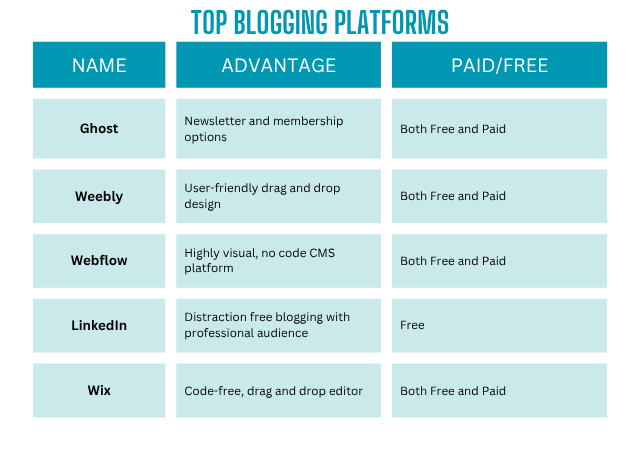
5. LinkedIn
Yes, you read it right. Apart from finding jobs and connecting with professionals, LinkedIn can also be used as a blogging platform. Just like Medium, it offers you direct exposure to millions of readers but in a more professional environment.
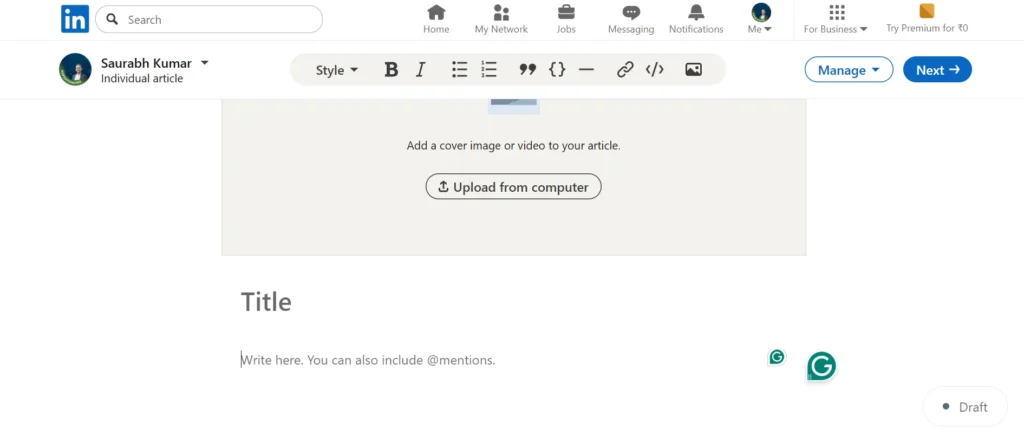
One of the main advantages of blogging on LinkedIn is that it directly adds to your resume, can get you more gigs, and lets you connect with like-minded people and businesses. Many LinkedIn blogs appear at the top of the search results, but you need to craft them well.
💡Important – Keep your tone conversational while writing an article on LinkedIn.
And just like Medium, it has similar restrictions, like no ownership, no customization, and one added disadvantage is that there is no earning. So start blogging on LinkedIn to connect with professionals and businesses and to strengthen your resume.
6. Wix
It’s a user-friendly website builder that lets bloggers start their blogging journey without coding. You can buy a domain and start building your website on Wix with a simple drag-and-drop option. The basic plan starts at $17.
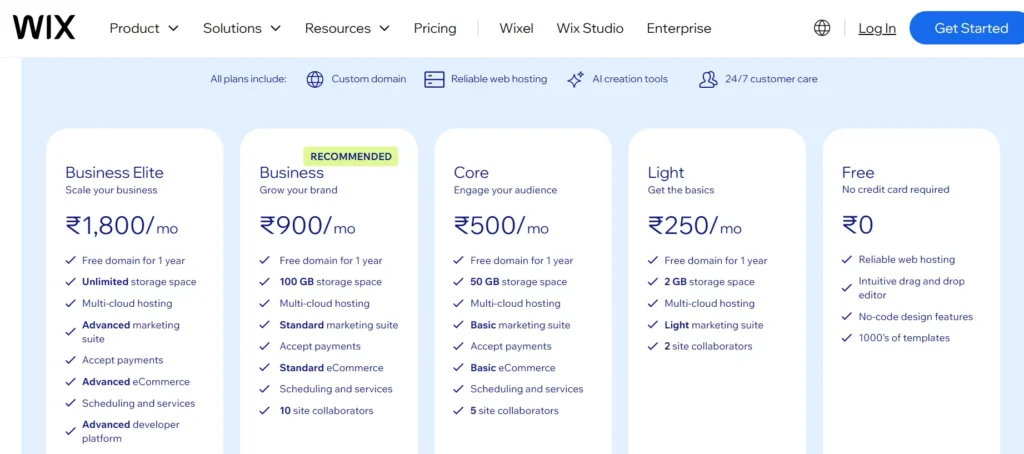
You can also take payments in different currencies and analyze how well your blogs are performing. With Wix, you can build a professional-looking website in a single day without any technical setup or hassle.
You can also use the free version with a subdomain, such as XYZ.wixsite.com, instead of XYZ.com.
But the biggest issue with WIX is that if your blog grows and you want to switch to WordPress, migration can be a cumbersome process. Also, there are issues with rigid templates, limited plugins, and fewer SEO options compared to other CMS platforms like WordPress.
Choose Wix if you want to build your own platform with a distinctive design instead of going with a plain “Write and Publish” platform like Medium, but you are not yet ready for WordPress-level customization.
7. Squarespace
If Wix is the Android of blogging, then Squarespace is the Apple. Squarespace offers a premium-looking, mobile-friendly website-building option that looks far more polished than Wix.
On Wix, you get the option to drag and drop every element on a blank canvas, while on Squarespace, you have to put the elements in a grid, and that’s why messing up your website design is harder on Squarespace.
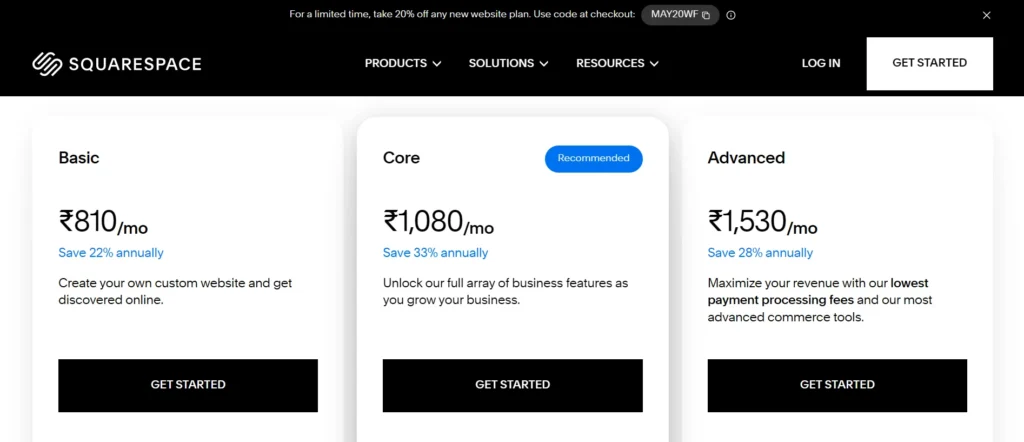
With Squarespace, you get a modern, magazine-style website with a typography-based layout that is ideal for writers. You just need to buy a domain and sign up for Squarespace to build a website. The basic Squarespace plan starts at $16/month.
But just like Wix, it has limited plugins and customization options, especially compared to a fully-controlled CMS like WordPress.org.
8. Ghost
A distraction-free platform that lets you build your dream blogging platform at a nominal cost of $9 per month. It’s simple, fast, and lets you build an audience base with an in-built email newsletter.
The clean design and content ownership make Ghost one of the most popular choices among writers. Yet, to make the most of Ghost, you might need a bit of HTML and CSS knowledge. Instead of simple drag-and-drop, you might have to work with code for better customization.
To monetize content, one needs a basic understanding of HTML and CSS. If a blogger is satisfied with fewer plugins and less customization than WordPress offers, then Ghost can be the best blogging platform.
9. Weebly
Weebly is another drag-and-drop website builder with a seamless user interface and multiple customization options, making it ideal for bloggers. It is owned by Square and has more than 500,000 live websites.
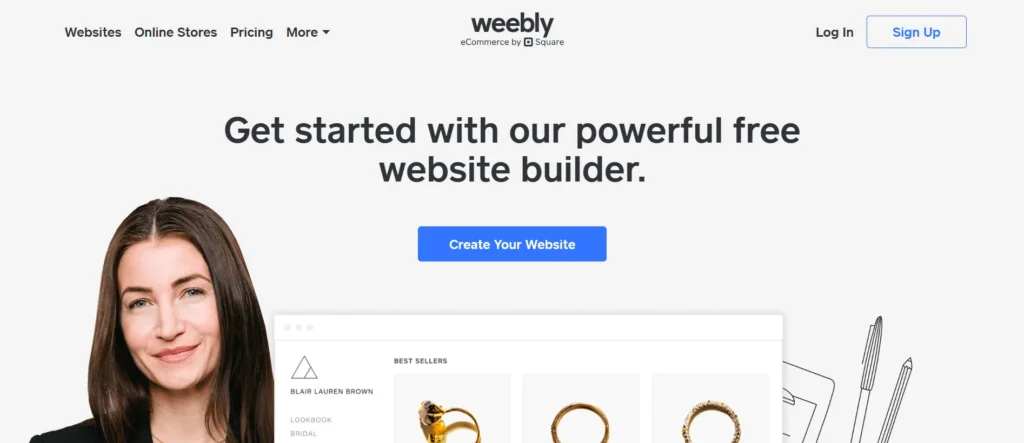
What makes Weebly more appealing to bloggers is that it offers blogging tools and built-in SEO features. But you also have to deal with the template rigidity and limited customization. Also, you have to be dependent on Weebly hosting if you are using the free version.
Weebly’s basic plan costs around $13/month, and if you are planning something between WIX and WordPress, you can go for it. If you are ok with the limitations in customization and template and still want a custom look, Weebly is for you.
10. Webflow
It is a code-free content management system that lets you design your blog without worrying about technical setup. On Webflow, you can design an SEO-optimized, fast-loading, customized website within a couple of days and start blogging.
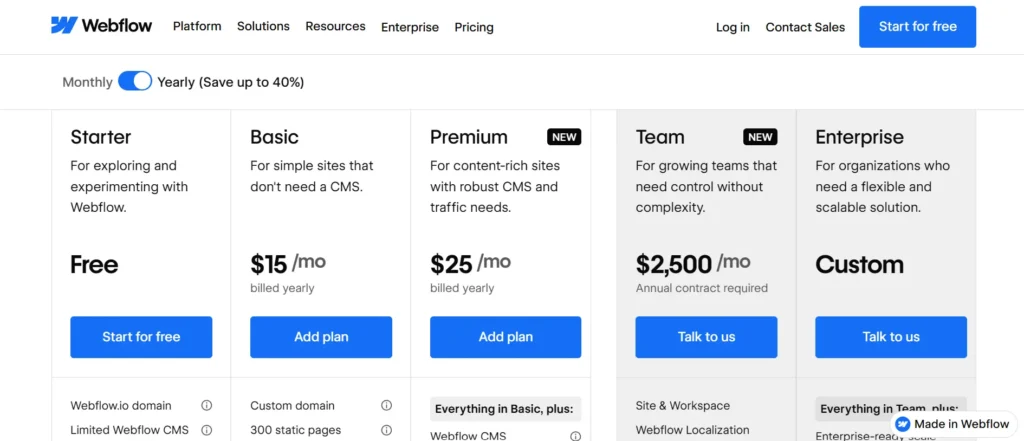
You can either build a website for free on Webflow and go with the subdomain XYZ.webflow.io, or you can buy a domain and purchase a Webflow site plan, which starts at $15/month.
One should go with Webflow if he is satisfied with a steeper learning curve, no native-language support, and higher subscription costs (as your blog grows). If these things don’t bother you, you should build your blogging website on Webflow.
Best Blogging Platforms for Students
✅ Blogger – A user-friendly blogging platform that helps students to start blogging from day one without technical knowledge or money.
✅ WordPress.com – Comes with a simple setup and a seamless dashboard, making it ideal for students who want to learn and explore blogging.
✅ Medium – Gives students exposure to millions of readers instantly without worrying about technical setup, website design, or coding.
✅ Wix – Perfect for students who want a touch of customization on their blogging platform without coding. Just drag and drop and build your website.
✅ Hashnode – Great option for technical students who wish to share coding tutorials, programming experience, and build content around developers.
Best Blogging Platforms for Beginners
✅ WordPress.com – Quick setup makes it ideal for beginners who want to start blogging from day 1 without any technical skills.
✅ Blogger – A simple and easy-to-manage blogging platform by Google that makes blogging as easy as possible.
✅ Wix – Comes with a drag-and-drop option, making it an effortless experience for beginners with no coding knowledge.
✅ Medium – Let’s beginner-focused users focus on writing and publishing by offering a clean writing platform with no subscription fee.
✅ Squarespace – Best for beginners who wish to build a professional-looking blog on a limited budget and with a user-friendly interface.
Best Blogging Platforms for Writers
✅ Medium – With over 100 million active users, writers can never skip Medium when it comes to blogging. It lets the writer focus solely on writing, editing, and publishing.
✅ Substack – Offers website-building, blogging, and email-newsletter services. This combo makes it a great choice for writers who wish to build their own audience base.
✅ Ghost – A quick-loading and modern publishing platform, specially designed for professional writers, newsletter creators, and membership sites.
✅ WordPress.org – The best professional blogging platform for writers, which can be scaled, completely controlled, and comes with no limitation on customization.
✅ Write.as – A distraction-free publishing platform where writers just have to focus on content creation. It offers a clean, hassle-free experience.
Best Blogging Platforms for Making Money
✅ WordPress.org – If you are serious about blogging and want to earn money from it, then nothing beats WordPress.org. Here, you get everything needed to build a career out of blogging.
✅ Ghost – Comes with built-in membership and subscription features, making it one of the best blogging platforms for writers who want to make money.
✅ Substack – Allows you to monetize your newsletter through paid subscriptions without any technical setup. A great option to make money through blogging.
✅ WIX – Has both business and ecommerce tools, which can help you turn your blogging into a brand that can later become your main source of income.
✅ Squarespace – Supports premium content, membership, online stores- almost everything you need to start making money from a blogging platform.
FAQs
Which is the best blogging platform in 2026?
WordPress.org is considered the best blogging platform in 2026, as it offers complete control, unlimited customization and monetization, strong SEO features, and a scalable-as-you-grow model.
What is the easiest blogging platform for beginners?
Blogger and Medium are two of the easiest blogging platforms for beginners who want to focus on writing, editing, and publishing while enjoying a clean user experience.
Which is the best blogging platform for SEO?
WordPress.org is considered the best blogging platform for SEO because of its extensive customization options, robust SEO features, and flexibility.
Are free blogging platforms good for professional blogs?
Free blogging platforms are good for exploring the blogging world, learning the basics, and building a small audience base. But professional bloggers usually stick with paid platforms as they offer better control, more customization, and opportunities to grow and earn.
Is WordPress.org better than WordPress.com?
WordPress.org offers better SEO features, control, flexibility, customization, and earning opportunities than WordPress.com. The .com platform is a simpler, easier option for beginners to blog.