It is quite common for people to think of a founder while discussing religion. They know Jesus, Buddha, Muhammad, and Abraham, and that’s why, while going back to the roots of a religion, they always try to find a founder. That explains why people still look for Hinduism founder on the internet.
For most religions, a great sage with a unique understanding of spirituality enters the timeline and sets in specific practices, belief systems, and principles. But that’s not the way Hinduism was introduced to the world. There was no founder of Hinduism in a specific timeline.
Still, people argue about its origin and wonder about the founder of Hinduism. Some say Hinduism was born in 3000 BCE, while others take it further to 6000 BCE. What’s the truth, and was there a person who introduced the world to Hinduism? Let’s find out through this blog post.
Busting the Myth of the Hinduism Founder
While searching for “hindusim founder name” on Google, many people forget that Hinduism is considered as Sanatana Dharma (eternal religion). There has never been a starting point, a single holy book, or a founder of Hinduism. Even the word “Hinduism” has been coined by the British to categorize different traditions for better administration.
It will be better to dig into the roots of Hinduism to unravel the truth behind Hinduism and its origin.
But before we sit in the time capsule of words to trace the origin of Hinduism through this article, let’s be clear that there has never been a founder of Hinduism, no single entity to define what a “Hindu” is, and no individual to speak for Hinduism as a whole.
Origin and History of Hindu
While exploring the origin of Hinduism, we went as far as 3300-1700 BCE. There, we found the roots of Hinduism linked with the Indus Valley Civilization, also called the Harappan Civilization.
The term Hindu came from the Sanskrit name of the Indus Valley river, “Sindhu”. Persians used the name Hindu for the people who lived near the Indus Valley River. But as Islam became a major part of India’s population, people began using the word Hindi to refer to anyone who wasn’t Muslim.
Even during the colonial era, Britishers used to refer to Sikhs, Jains, and Buddhists collectively as Hindus. So if we go by the books of scholars, there was no entity like Hinduism founder as Hinduism emerged through a group of people living near the Indus valley civilization.
Hinduism Through Different Ages
Throughout different timelines, many figures have contributed to Hinduism through philosophy, teachings, ancient texts, and books. This is why, rather than being considered as a single religion, Hinduism is considered a way of life. And this way of life was transformed through different ages.
Vedic Age
The 4 Vedas were composed during the Vedic Age. During the same age, Brahmins used these Vedic texts to perform religious rituals and then established themselves at the top of the caste system.
But the main basis of caste was occupation. Also, it was flexible and offered mobility. As we moved forward in the Vedic age, the caste system became rigid and entwined with Hinduism.
- There were no temples and idol worship during this period
- Chanting of mantras was there
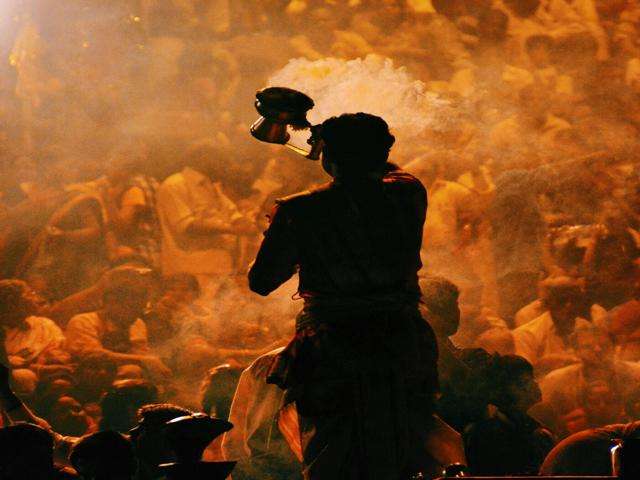
- Fire sacrifice (Hawan) was a major part of this age
- The Gayatri Mantra was the most revered mantra of the Vedic age
The Age of the Epics and the Puranas
This was a time when new religious beliefs like Buddhism and Jainism were rising, Janpadas were transforming into Mahajanpadas, and a new political system was growing. All this led to the decline of the Vedic age. The age of the Epics and the Puranas was going to shape Hinduism in this era.
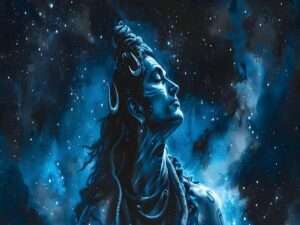
Many current practices of Hinduism, like idol worship, temples, Hindu god stories, devotion to Shiva, Brahma, and Vishnu, were popularized during this age. There were no questions of Hinduism founder now as we were worshiping deities in temples.
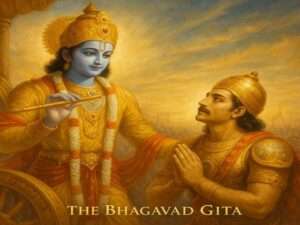
- This was the time when the Mahabharat and the Ramayan were composed
- Epics talked about the history of mortal men, like the Mahabharat and the Ramayan
- Puranas talked about celestial beings like Vishnu Purana
- The practice of devoting oneself to one deity began in this age
The Bhakti Movement
Although it started between the 6th and 9th centuries in the Tami region, it spread to North India during the Mughal rule. The core belief of the Bhakti movement was salvation (moksha), and it was based on the philosophy of personal devotion to a deity without the need for rituals and priests.
- It challenged the rigid caste system
- Preferred devotion over rituals
- Introduced the use of songs, dance, and poems for devotion
People were no longer asking about Hinduism founder name and sticking to strict rituals; they wanted a more personal form of devotion.
During the Colonial Era, Britishers used their most powerful weapon- divide and rule. They took the Brahmins on their side for administrative and social control. Also, the Brahmins helped the Britishers to understand the Vedas and later used different parts of the Vedas to establish the “Hindu Law”.
The Colonial Era
This law solidified the caste system. Simply, the Vedas were translated with a colonial mindset and to strengthen the grip of the British East India Company.
The Current State of Hinduism
Hinduism is currently the third largest religion with 1.2 billion followers, which is almost 15% of the global population. We can say that Hinduism has gone through a vast phase of transformation through different timelines, and each period has made its impact on Hinduism.
This is the main reason why Hinduism doesn’t have an origin, and there is no founder of Hinduism. People might search for the identity of Hinduism founder name, but if they search for facts, they will end up going through the transformational phase of Hinduism and come to the conclusion that Hinduism is not a religion rather it is a way of life.